A note before we start: I’ve always felt a flicker of worry before arriving somewhere cold with Nayeli, and I’ve never once had an actual problem. I travel over-prepared on purpose, a proper TOG 4 sleep sack has occasionally been too warm rather than not warm enough. This guide is built from that real experience plus verified safe sleep guidelines.
Table of Contents
There’s a very specific kind of travel anxiety that comes with a cold-sounding destination and a baby. Norway, Sweden, a windswept coast in winter, it’s tempting to assume the room will be cold and the trip will be a battle against the temperature. In practice, the opposite is often true, and it comes down to how a place is actually heated, not how cold it looks on a map.
The cold-country myth (and the house that surprised me)
It’s easy to assume that a country with a reputation for cold weather means a cold place to sleep. In my experience, it’s almost the opposite. How warm you’ll actually be indoors depends far more on local heating habits and building standards than on the climate outside.
The lesson for traveling with a baby: don’t plan your packing around the destination’s reputation, plan around what you can actually control once you arrive. That’s exactly why a good sleep sack matters more than the country on your itinerary.
- Whether the room has a thermostat you can adjust, or whether heating is centrally controlled and out of your hands
- How the room feels at the time baby will actually be sleeping, not just when you check in during the day
- Whether there are drafts near windows or under doors where the crib or travel cot might end up
- If you’re genuinely unsure, packing a room thermometer is a small, light addition that removes all the guesswork
How to tell if baby is too warm or too cold
This is the part that trips up most parents, especially in an unfamiliar room where you can’t rely on your usual instincts. The good news: there’s one simple, reliable check that works anywhere in the world.
- Chest or back feels hot and sweaty
- Damp hair, flushed cheeks
- Rapid breathing, restlessness
- Heat rash on the neck or chest folds
- Chest or back of neck feels cool to the touch
- Skin looks a little pale or mottled
- Waking more frequently and fussing
- Not, on its own, cold hands or feet
This is one of the most common worries new parents have, and it’s almost always completely normal. A baby’s circulatory system prioritizes the core over the extremities, so cool hands and feet alongside a warm chest is exactly what you’d expect, not a sign that something’s wrong. If the chest and neck feel warm and dry, baby is comfortable. There’s no need to add an extra layer just because their fingers feel cool.
Dress baby in roughly one more layer than you’d wear yourself to be comfortable in that room. If you’d sleep fine in a t-shirt, baby probably needs a light layer under their sleep sack. If you’d want a jumper, add a slightly warmer TOG rating instead of piling on loose layers.
Choosing the right TOG sleep sack for travel
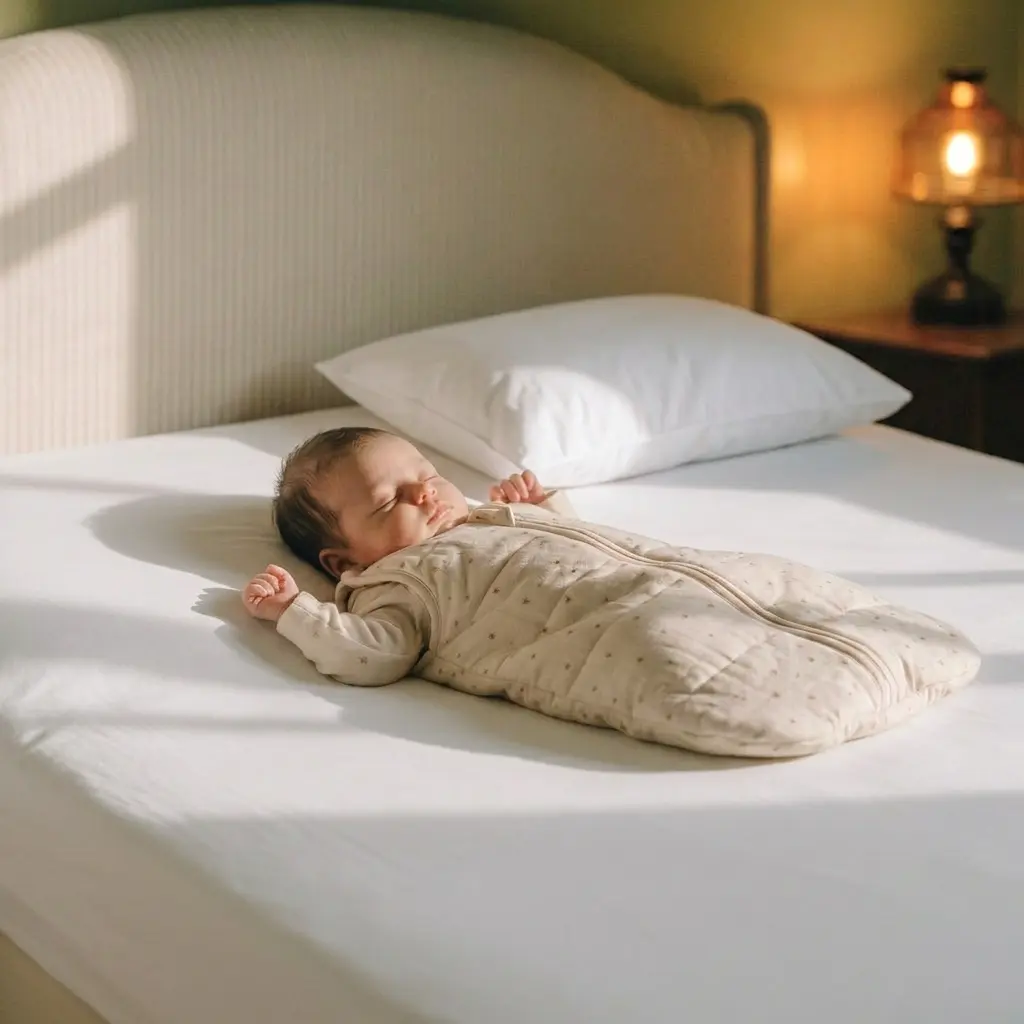
A sleep sack is the single most useful piece of kit for traveling with a baby in cooler weather, it replaces loose blankets entirely and lets you match warmth to the room rather than guessing with layers that can be kicked off in the night.
| Room temperature | TOG rating | What to wear underneath |
|---|---|---|
| 24°C+ (75°F+) | 0.2 to 0.5 | Short-sleeve bodysuit only |
| 21 to 23°C (70 to 74°F) | 1.0 | Short or long-sleeve bodysuit |
| 18 to 20°C (64 to 69°F) | 2.5 | Long-sleeve bodysuit and sleeper |
| Below 18°C (below 64°F) | 3.5 to 4.0 | Long-sleeve sleeper, socks if feet aren’t covered |
- Bring the warmest sleep sack you own rather than packing multiple lighter ones, it’s easier to run a heavy sack too warm (just skip the layers underneath) than to be genuinely short of warmth
- Pack one lightweight bodysuit and one warmer sleeper as your two layering options, rather than a full wardrobe of in-between pieces
- Skip loose blankets entirely, even for travel, they’re not safer just because you’re away from home
- A pair of socks in the bag costs nothing and covers the one situation where TOG sizing runs short at the feet
Keeping milk and bottles warm on the move
Cold weather outdoors, an unfamiliar kitchen, or a long day out all make it harder to warm a bottle exactly when your baby needs it. A little preparation goes a long way here.
- An insulated bottle bag or thermos keeps a pre-warmed bottle at temperature for a couple of hours while you’re out, far more reliable than hoping to find somewhere to reheat it
- Room-temperature milk is a perfectly fine backup, most babies will drink milk that isn’t warmed at all if warming genuinely isn’t possible, it doesn’t have to be warm to be safe
- A travel bottle warmer that works from a car’s 12V socket or USB power bank is worth packing if you’ll be relying on bottles away from a kitchen for several days
- Warming a bottle in a bowl of hot water from a kettle works anywhere with a kettle, most hotel rooms have one, this is often more practical than an electric warmer you’d need to pack and find an adapter for
FAQ
How do I know if my baby is too warm at night?
Check the chest or back of the neck rather than hands or feet. A hot, sweaty chest, flushed cheeks, or damp hair are signs of overheating. Cool hands and feet on their own aren’t a reliable sign of anything.
Why does my baby have warm hands but the rest of them feels normal?
This is usually just normal circulation and not a sign of a problem. If the chest and neck feel a comfortable temperature and baby seems settled, warm hands alone aren’t something to worry about.
My baby’s hands and feet are cold but their body feels warm, is that normal?
Yes, this is one of the most common and most normal patterns there is. A baby’s circulation prioritizes the core over the extremities, so cool hands and feet alongside a warm chest is exactly what you’d expect, not a sign your baby is cold.
How can I keep my baby warm in the car seat in winter?
Dress baby in thin layers under the harness, never a puffy coat or snowsuit, since padding compresses in a crash and creates dangerous slack. Warm the car beforehand if you can, and add a coat backwards over the shoulders or a blanket on top once your baby is securely buckled in.
How do I keep a travel cot warm in winter?
Focus on the sleep sack’s TOG rating rather than the cot itself, a 3.5 to 4.0 TOG sack handles most genuinely cold rooms well. Keep the travel cot away from windows or drafts, and check the room’s actual temperature at night rather than assuming based on daytime warmth.
What’s the best sleeping bag for a baby travelling somewhere cold?
A 3.5 to 4.0 TOG sleep sack is a safe, warm choice for genuinely cold rooms, and it’s easy to run it slightly too warm by removing a layer underneath rather than being caught short without enough warmth.
“The destination’s reputation for cold matters far less than a good sleep sack and a quick check of the chest, not the hands.”
I’ve worried about cold rooms before almost every trip with Nayeli, and I’ve never once had a real problem, mostly because a warm TOG sack does the heavy lifting regardless of where we are. Pack for the worst case, check the chest or neck instead of the fingers, and never let a puffy coat anywhere near a car seat harness. The rest tends to sort itself out, wherever you end up.
Keep exploring