A note before we start: city buses with a baby are something I’ve done plenty of times. Long-distance coaches, I haven’t personally tried with Nay yet, so that section is built from careful research into operator policies rather than firsthand experience.
Table of Contents
Car seat rules feel so consistent everywhere else that it’s genuinely surprising the first time you learn buses and coaches play by different rules entirely. Here’s exactly why, and what actually changes between a five-minute city bus hop and a five-hour coach trip.
The legal answer, explained
In the UK, seatbelt and child restraint law (the Road Traffic Act, enforced through DfT regulations) requires a car seat for children under 12 or under 135cm in cars, vans, and taxis. Buses and coaches with more than 8 passenger seats are specifically exempt from this requirement.
- A baby or child can legally travel on a bus or coach without a car seat, on an adult’s lap or in their own seat with just the standard seatbelt if one is fitted
- If the vehicle happens to have a child seatbelt or restraint fitted, you’re required to use it, the exemption removes the obligation to provide or bring one, not the obligation to use one that’s already there
- This applies specifically to vehicles with more than 8 passenger seats, smaller minibuses and shared vans can fall back under standard car seat law
- The exemption exists because most buses and coaches aren’t built with the anchor points or seat design that car seats need to install safely in the first place
City buses: stroller or babywearing
On a standard city bus, there’s genuinely no car seat conversation to have, buses simply aren’t built for one. Your two real options are keeping baby in the stroller or wearing them in a carrier, and which works better depends entirely on how full the bus is.
- The wheelchair and buggy bay, usually near the middle doors, is designed exactly for this. Use the brake, and if there’s a strap or barrier, use it
- Always give up that space for a wheelchair user, the same rule as on trains, they take priority over a buggy every time
- Face the stroller against a wall or barrier rather than into the aisle, sudden braking is far more common on buses than trains, and an unsecured stroller can roll
- Fold it if the bus is genuinely packed, not required by law on most city buses, but it’s the considerate move at rush hour
Priority seats near the front exist for exactly this situation, pregnant passengers, parents with young children, and anyone less steady on their feet. Don’t hesitate to ask a driver or fellow passenger if one isn’t obviously free, most people are glad to move.
Coaches and long-distance buses
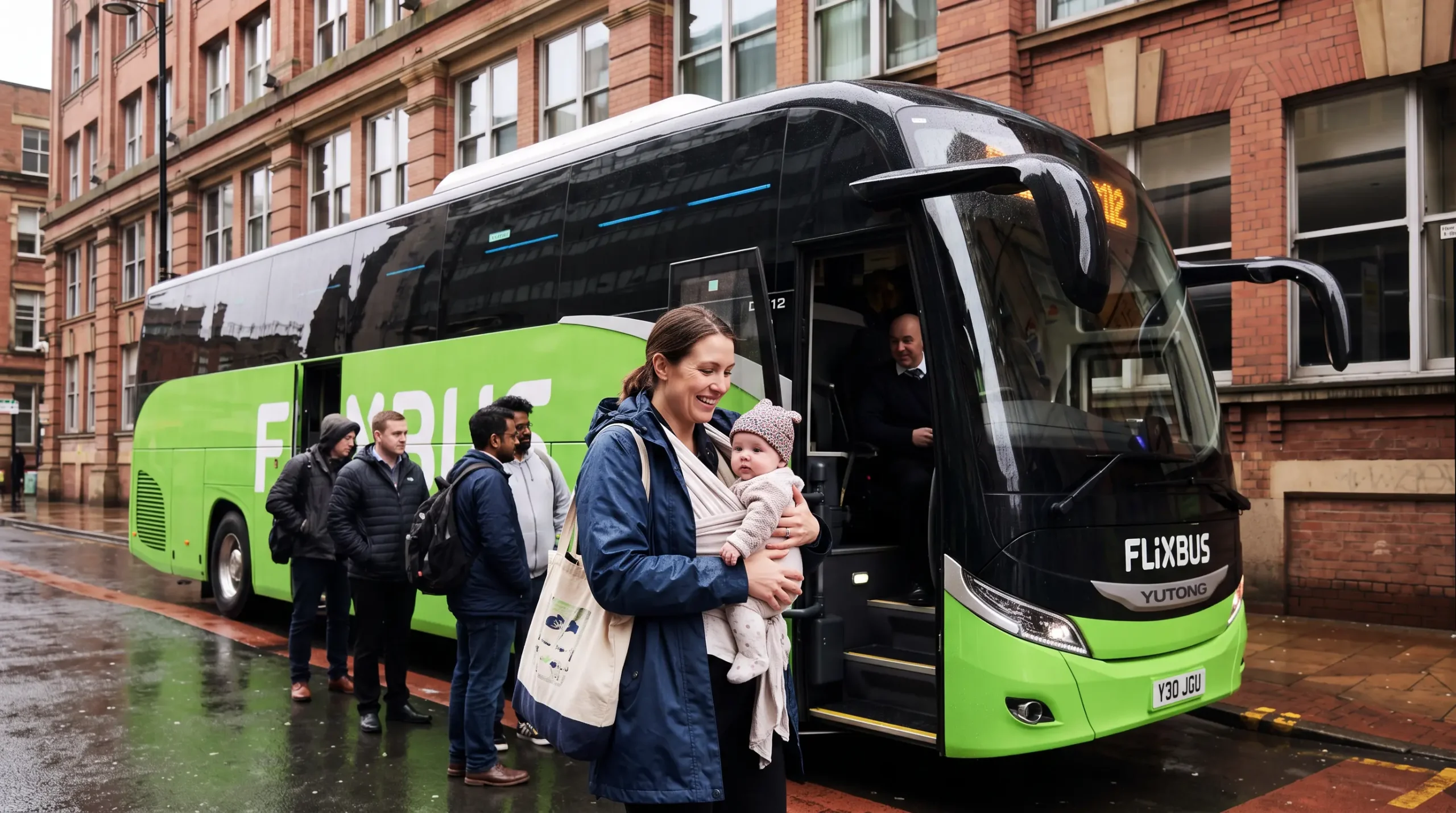
This is where things genuinely diverge from the city bus rules, and where the legal exemption and an operator’s own policy can pull in different directions. Long-distance coach operators like FlixBus set their own requirements on top of what the law technically allows.
- The operator’s own child seat policy, not just the general legal rule, before you assume you can travel without one
- Whether your car seat is compatible with a 2-point lap belt, most coaches only have lap belts, not the 3-point belts your seat may be designed to use in a car
- Whether a seatbelt adapter is required to make that 2-point connection work safely, and whether you need to bring your own
- Toilet access and journey length, a long coach trip with a young baby is a different logistics question than a short city hop, plan feeding and nappy changes around scheduled stops
It’s easy to see “no car seat law on buses” and assume that covers every long-distance coach too. In practice, an individual operator can require exactly what a car would, own seat, own adapter, confirmed compatible with their vehicles. Always check the specific operator’s policy for your route rather than relying on the general UK exemption.
FAQ
Can you take a baby on a bus without a car seat?
Yes, legally. UK law exempts buses and coaches with more than 8 seats from the child car seat requirement that applies in cars and taxis. A baby can travel on your lap or in a stroller with no car seat needed.
Can you take a baby on a bus?
Yes, with no minimum age. Keep baby in the stroller in the wheelchair and buggy bay, braked and against a barrier, or wear them in a carrier. Priority seats near the front are there if you need one.
Can you take a baby on a coach?
Yes, but check the specific operator’s policy first. Some, like FlixBus, require you to bring your own approved car seat and a 2-point seatbelt adapter, and can refuse boarding without both, even though the general legal exemption still applies.
Do I need to use a car seat if the bus happens to have one?
Yes. The exemption removes the requirement to provide or bring a car seat, it doesn’t remove the requirement to use one that’s already fitted and available on that specific vehicle.
Where’s the safest place for a stroller on a bus?
The wheelchair and buggy bay, usually near the middle doors. Brake it, face it against a wall or barrier rather than into the aisle, and give up the space immediately if a wheelchair user needs it.
“Legal and easy aren’t always the same thing, but on a city bus, they mostly are.”
A city bus with a baby is genuinely simple, no car seat, no special gear, just a braked stroller in the buggy bay or a carrier and a firm grip on the pole. A coach is where it’s worth double-checking the operator’s own rules before you show up, since some ask for exactly what a car would. Either way, the law is more relaxed here than most parents expect.