A note before we start: babies under 1 lose water 3 to 5 times faster than adults, can’t sweat efficiently, can’t undress themselves, and can’t tell you they’re thirsty. Away from home, these things matter even more, since you have less control over the room, the car, or the stroller than you would at home.
Table of Contents
Your baby is hot. So are you. And somewhere in that heat, a small voice is asking whether you’re doing the right things. This guide exists for exactly that moment, clear, practical steps rather than a wall of information to wade through.
Warning signs: when to call emergency services
A body temperature above 38°C (100.4°F) in a baby exposed to heat, without a cold or obvious infection, can signal the start of heatstroke. This is different from a normal fever, it generally won’t come down with paracetamol/acetaminophen in this context, and needs urgent medical attention rather than home management.
- Fever above 38.5°C (101.3°F) in a baby under 3 months
- Fever above 40°C (104°F) at any age
- Baby is hard to wake, has a blank or vacant look, or is struggling to breathe
- Sunken soft spot on the head (fontanelle)
- Skin that’s hot and dry, or the reverse, heavy sweating that suddenly stops
- No wet nappies for more than 6 hours
Room temperature and sleep
Official heatwave guidance is consistent: keep living spaces and baby’s room below 25°C (77°F), close blinds and curtains as soon as it’s cooler inside than out, and air the room out overnight and early morning, ideally between 10pm and 7am.
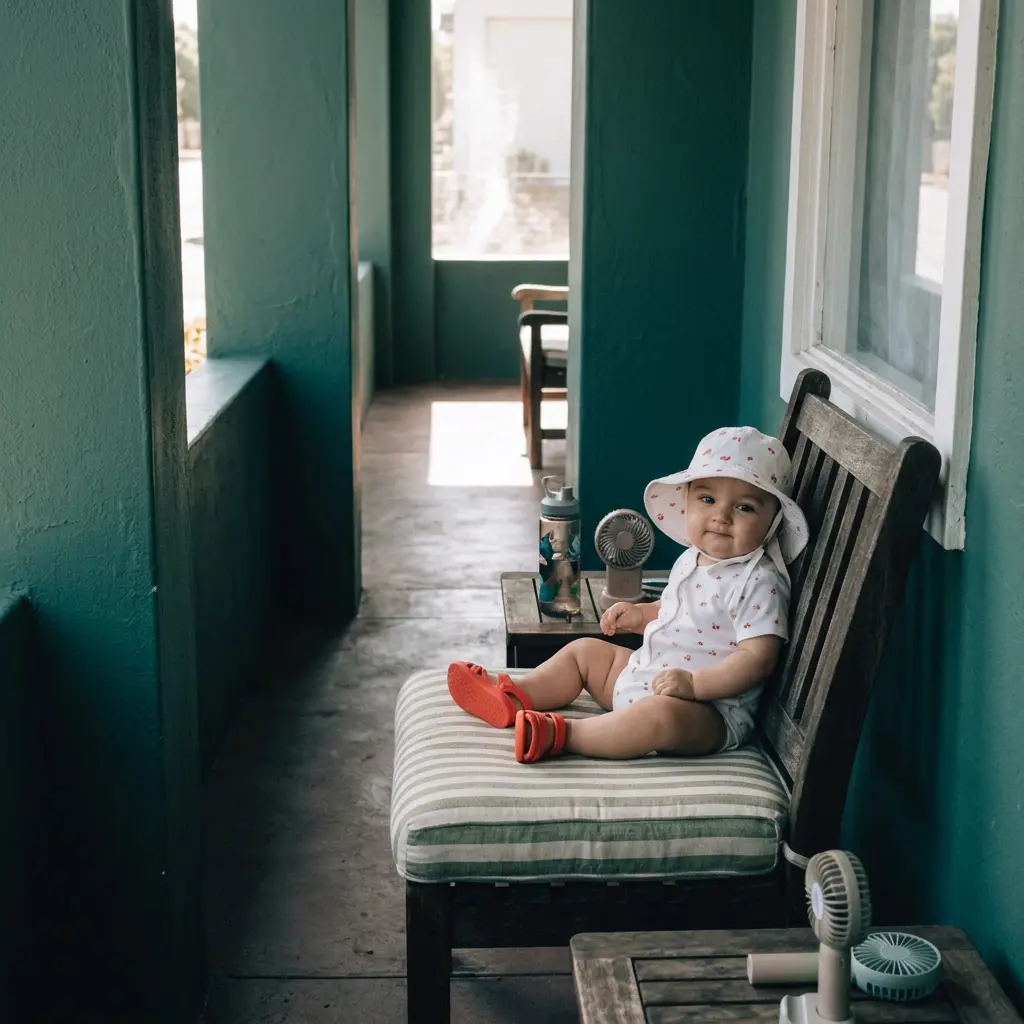
- A fan can help circulate air, but should never point directly at baby, direct airflow dries out mucous membranes and speeds up dehydration
- Position a fan up high, facing the wall, and pair it with a damp cloth hung nearby to cool the room as air moves past it
- Close up the room in the morning as soon as outside temperature climbs past inside temperature, then reopen once it’s cooler out again
Feel the back of baby’s neck, not their hands or feet, which are always cooler. A damp, sweaty neck means baby is overdressed, remove a layer. A cool, dry neck means they’re comfortable.
Hydration: what to actually do
A baby under 6 months who’s exclusively breastfed generally doesn’t need extra water, even in a heatwave, offering the breast more often (every 60 to 90 minutes during the day) is enough. For bottle-fed babies, a small amount of low-mineral water can supplement, without exceeding about 30 to 50ml between bottles.
Breast or bottle milk more often, without waiting for thirst cues. A cool damp cloth on the neck, arms, and legs, and a lukewarm bath if needed.
Water every 30 to 60 minutes during the day, small sips rather than forcing a big volume. Water-rich foods like watermelon, melon, or pear puree help too.
As a general reference point, a 4kg baby needs roughly 600ml of water a day, a 10kg baby closer to 1 litre. There’s no need to force a large volume at once, a baby who drinks small amounts often stays better hydrated than one pushed to finish a big serving.
At least 5 to 6 genuinely wet nappies over 24 hours, with pale, clear urine, never dark. Below that, or with dark, scant urine, take it seriously and check in with a doctor if it doesn’t improve quickly.
Baths and other ways to cool baby down
Frequent baths during a heatwave aren’t just allowed, they’re actively recommended. The trick is the water temperature: aim for one to two degrees below baby’s body temperature, around 35 to 36°C (95 to 97°F), never colder. The goal is to gently bring the body temperature down, not shock it into dropping suddenly.
- A thermal water spray misted over arms and legs, avoid the face
- A damp (not cold) washcloth wiped over the body every 30 to 60 minutes
- Loose, natural-fiber clothing that lets air circulate rather than trapping heat
Going outside: timing and the pram cover myth
During a heatwave, the rule is simple: go out before 10am or after 6 to 7pm. Between those windows, staying inside, in the shade, or somewhere air-conditioned is the safer call.
Blocks airflow completely and creates a furnace effect within minutes, official transport safety warnings specifically caution against this.
Blocks direct sun while letting air move normally underneath, the safer way to shade a stroller in real heat.
The absolute danger: baby alone in a car
In just 26°C (79°F) outside, a car’s interior can reach 45°C (113°F) within 10 minutes. The dashboard can approach 77°C (171°F) after an hour. A cracked window makes almost no difference to this progression. There’s no “safe” amount of time to leave a baby alone in a car, even for a quick errand.
With rear-facing car seats, it’s genuinely possible to lose visual awareness of your baby from the driver’s seat, especially on an unfamiliar route or a jet-lagged travel day. A simple habit that helps: place your bag, phone, or work badge in the back seat next to baby, so you’re forced to go back there when you get out of the car.
If you ever see a baby alone in a car, don’t wait, call emergency services, look for the driver nearby, and get the vehicle opened without delay if the child shows any signs of distress.
FAQ
What temperature should baby’s room be in a heatwave?
Aim to keep it below 25°C (77°F). Close blinds and curtains in the morning as soon as it’s cooler inside than out, and air the room overnight and early morning when it’s cooler outside.
How do I keep my baby cool during a heatwave?
Frequent lukewarm baths, a damp cloth on the skin, loose natural-fiber clothing, and staying indoors or in the shade between 10am and 6-7pm. A fan can help if pointed away from baby, never directly at them.
How can I tell if it’s heatstroke and not just a fever?
Heat-related fever generally doesn’t come down with paracetamol/acetaminophen, unlike an infectious fever. If temperature is above 38.5°C under 3 months, or above 40°C at any age, or baby is hard to wake, seek medical care immediately.
Can I use a fan for my baby in a heatwave?
Yes, but never pointed directly at baby, direct airflow dries out mucous membranes and speeds up dehydration. Place it up high, angled toward a wall, to circulate air without blowing on them.
Can I leave my baby in the car for a quick errand during a heatwave?
No, never, even for a minute. At just 26°C outside, a car interior can reach 45°C within 10 minutes. There’s no length of time that’s genuinely safe.
“A heatwave doesn’t call for improvising with a baby, but it shouldn’t cancel your trip either.”
A cool room, regular hydration, the right clothing, and real vigilance around the car, those four habits do almost all the work. The actual danger is forgetting or overconfidence, not the heat itself, once you’ve genuinely planned around it.