
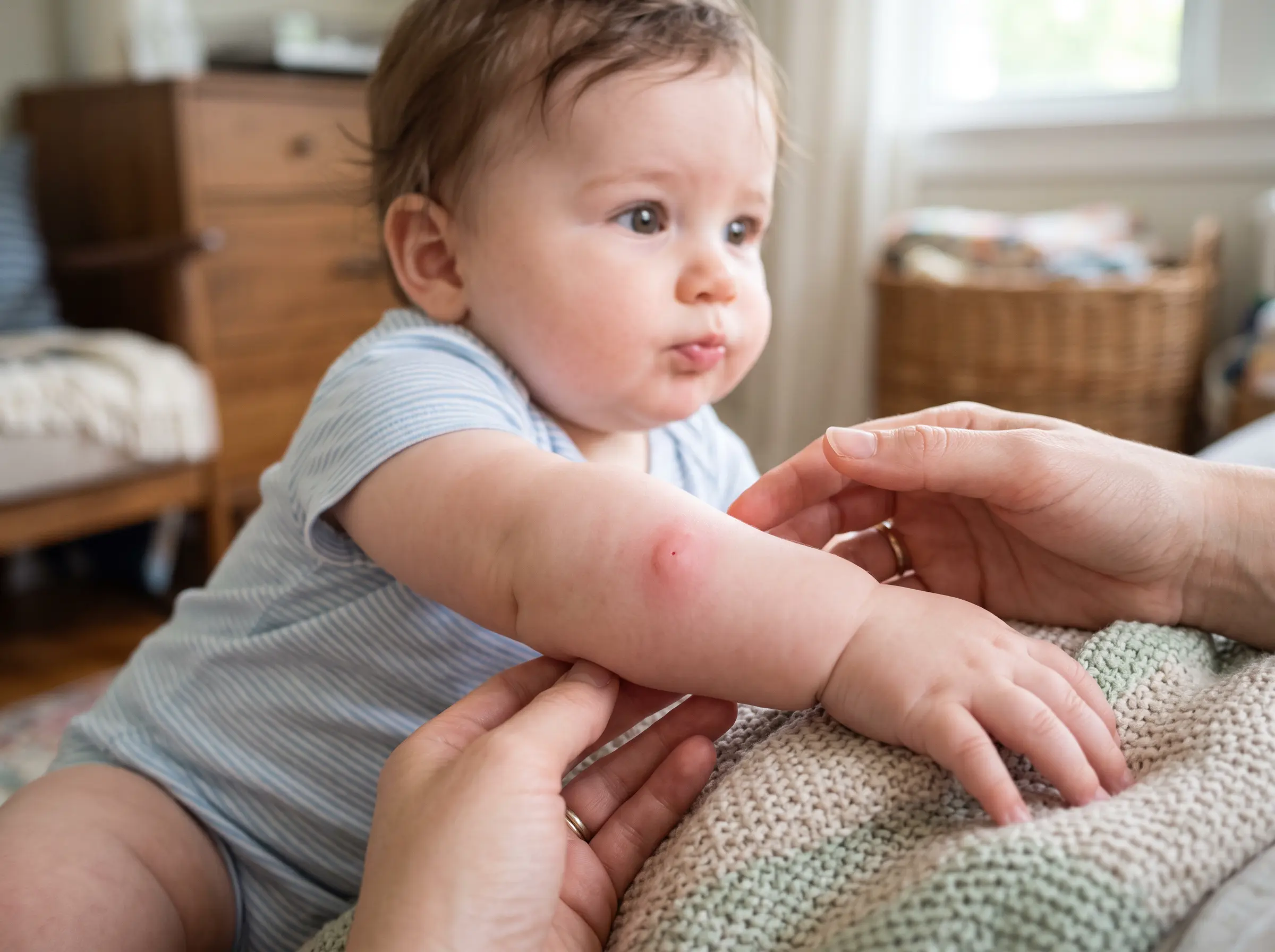
Most of the tips on this blog are aimed at parents heading somewhere hot and exotic, where mosquitoes are an obvious concern. But here’s a fact that might surprise you: you don’t actually need to leave the UK to need a good mosquito repellent. Researchers at the London School of Hygiene & Tropical Medicine have flagged that a wet start to June 2026 followed by warming temperatures created ideal conditions for a mosquito population surge across the country. Milder winters play a role too, unlike in the past, when UK winters were cold enough to kill off adult mosquitoes or push them into a hibernation-like dormancy, warmer winters now allow some species to stay active year-round.
So while the advice below was originally written with tropical trips in mind, if you’re based in the UK, don’t skip it either. Whether you’re jetting off somewhere exotic or just spending an evening in the garden at home, the right baby-safe repellent matters either way. (Source: LSHTM)
Age-by-age guide
Age changes everything when it comes to mosquito protection for babies. Here’s what the AAP and CDC actually recommend at each stage:
| Age | What’s safe |
|---|---|
| Under 2 months | No repellent of any kind. Physical barriers only: netting, protective clothing, staying indoors during peak biting hours (dawn and dusk) |
| 2 months to 3 years | DEET (up to 30%) or picaridin, applied sparingly. No oil of lemon eucalyptus (OLE/PMD) at this age |
| Over 3 years | Same as above, plus OLE/PMD becomes an option, giving protection similar to a low concentration of DEET |
This lines up with current NHS guidance too: no repellent under 2 months, physical barriers only, then DEET or picaridin from 2 months, with oil of lemon eucalyptus reserved for age 3 and up.
Chemical repellents: what’s actually safe
“Chemical” sounds alarming, but for children over 2 months, properly regulated repellents used as directed are considered safe by the AAP, and in places where mosquitoes carry real disease risk, the protection they offer outweighs the theoretical concerns people often worry about.
| Ingredient | Safe from | Protection time |
|---|---|---|
| DEET (up to 30%) | 2 months | Several hours, longer at higher concentrations within the safe range |
| Picaridin | 2 months | Comparable to DEET, less odour, less likely to irritate skin |
| OLE / PMD | 3 years, never before | Around 8 hours for mosquitoes at 20% concentration, shorter for ticks and black flies |
| IR3535 | 2 months | Up to 8 hours against mosquitoes, up to 7 hours against ticks |
A few age-appropriate options to look for
Rather than picking a product, focus on the active ingredient on the label, that’s what actually determines whether it’s appropriate for your baby’s age.
Mustela Anti-Mosquito Baby lotion
Uses IR3535 rather than DEET or picaridin, fragrance-free, suitable for the whole family including pregnant and breastfeeding women.
Sawyer 20% Picaridin lotion
A widely available picaridin option in the UK, fragrance-free and non-greasy, giving several hours of protection.
Worth a word of caution: some UK brands marketed as “natural” and “safe from 6 months” actually use oil of lemon eucalyptus (PMD) as their active ingredient, the exact ingredient the AAP and CDC advise against before age 3, regardless of how the product is marketed. Always check the active ingredient on the label rather than relying on the age claim on the front of the bottle.
How to apply repellent safely
- Spray onto your own hands first, then apply it to your baby’s face, rather than spraying directly onto their skin
- Avoid the eyes, mouth, and hands entirely, babies put their hands in their mouths constantly, and repellent there is easy to ingest
- Apply to exposed skin only, over sunscreen if you’re using both, repellent goes on last and typically needs reapplying more often than sunscreen does
- Wipes give you more control than sprays for a wriggling baby, and reduce the risk of overspray near the face
- Wash repellent off with soap and water once your baby’s back inside for the evening, don’t leave it on overnight
Physical barriers first
For babies under 2 months, barriers aren’t a backup plan, they’re the only option. For older babies, they’re still the best first layer, reducing how much repellent you actually need to use.
A fine-mesh net fitted over the stroller, car seat, or bassinet is the single most effective barrier at any age. Look for mesh small enough to block tiny midges too, not just mosquitoes, with a universal elasticated edge. Use only while your baby is awake and supervised, remove it if they fall asleep and transfer them to a normal flat sleep surface.
Loose, breathable, light-coloured long sleeves and trousers cover skin without overheating your baby. Permethrin-treated clothing adds another layer of protection and is considered safe for babies once applied to fabric rather than skin.
Timing matters too. Mosquitoes are most active at dawn and dusk, so keeping your baby indoors or under netting during those windows cuts exposure significantly without needing any product at all.
What doesn’t really work
It’s worth being honest here rather than repeating marketing claims. Citronella bracelets, adhesive stickers and patches, and pure essential oil blends are widely sold as gentle alternatives for babies, and they’re appealing precisely because they feel less “chemical.” But the evidence behind most of them is thin.
- Citronella bracelets and stickers create a small scented zone around a single point on the body, they don’t cover exposed skin the way a topical repellent does, so bites elsewhere are still common
- Pure essential oils (lavender, eucalyptus, citronella oil itself) haven’t been through the same testing as properly regulated repellent ingredients, and some can irritate a baby’s sensitive skin
- Ultrasonic devices and phone apps claiming to repel mosquitoes with sound have no credible evidence supporting their effectiveness
None of this means these products are dangerous, most are genuinely harmless. The honest framing is that they buy peace of mind more than they buy protection, if you’re somewhere mosquitoes carry real disease risk, lean on netting, clothing, and a properly regulated repellent rather than counting on a bracelet to do the job.
Packing checklist for mosquito-heavy destinations
- ☐ Fine-mesh net sized for your stroller, car seat, or bassinet
- ☐ Age-appropriate, clearly labelled repellent (DEET or picaridin for under 3, OLE/PMD optional over 3)
- ☐ Repellent wipes for easier, more controlled application on the go
- ☐ Light-coloured long sleeves and trousers, even in warm climates
- ☐ A portable fan or air-conditioned accommodation where possible, mosquitoes are less active in moving air
- ☐ After-bite soothing gel or cream in case of bites despite precautions
- ☐ A note of your destination’s specific disease risks (malaria, dengue, Zika) checked before you travel, since precautions can vary by region
Natural mosquito repellent options: what actually helps
If you’d rather avoid DEET where you can, there are a couple of genuinely evidence-backed options, alongside the barrier methods that remain the safest “natural” choice at any age.
- OLE/PMD (over 3 years only) is the one plant-derived, properly regulated option with real efficacy data, giving protection comparable to a low concentration of DEET
- Picaridin is synthetic but modelled on a compound found in pepper plants, and is gentler on skin and less odorous than DEET while offering similar protection from 2 months
- Physical barriers (netting, long clothing, timing outdoor time around dawn and dusk) remain the only truly natural option with no exposure at all, and they’re the right choice for babies under 2 months by default
If “natural” matters to you as a value rather than just a marketing word, barriers plus picaridin (or OLE/PMD once your child is old enough) gives you the closest thing to that without giving up real protection.
Frequently Asked Questions
What mosquito repellent is safe for babies?
From 2 months old, EPA-registered repellents containing DEET (up to 30%) or picaridin are considered safe by the AAP and CDC. Under 2 months, no repellent should be used at all, rely on netting and clothing instead. OLE/PMD should never be used before age 3.
Can you use mosquito spray on a 6-month-old?
Yes. A 6-month-old falls within the 2 months to 3 years bracket, so DEET (up to 30%) or picaridin sprays are appropriate. Apply to your own hands first and then to their skin, avoiding the face, eyes, mouth, and hands.
Why is DEET considered risky for babies?
DEET itself isn’t considered risky when used as directed from 2 months old, the caution is specifically about babies under 2 months, whose skin absorbs more and whose bodies process chemicals differently. At the correct age and concentration, DEET has a long safety record and strong effectiveness data behind it.
Are mosquito repellent wipes better than spray for babies?
Often, yes. Wipes give you full control over where the product goes, there’s no overspray risk near the face, and they’re easier to use in a moving stroller or car seat. Sprays work fine too, applied to your hands first rather than directly onto your baby.
Do I need mosquito repellent in the UK?
Increasingly, yes. Warmer, wetter conditions have created ideal breeding grounds for UK mosquitoes in recent summers, and milder winters mean some species no longer die off or go dormant the way they used to. It’s still a much lower disease risk than tropical destinations, but bites themselves are becoming more common at home.
Is mosquito repellent safe for a 6 month old baby?
Yes. At 6 months, your baby falls into the 2 months to 3 years bracket, so a repellent containing DEET (up to 30%) or picaridin is considered safe by the AAP, CDC, and NHS guidance. Oil of lemon eucalyptus still isn’t an option until age 3.
What insect repellent can I use on a 12 month old?
The same options as any baby between 2 months and 3 years: DEET up to 30%, or picaridin, applied sparingly to exposed skin. Oil of lemon eucalyptus (OLE/PMD) still isn’t recommended until age 3, regardless of the product’s marketing.
“The age cutoffs here aren’t arbitrary caution, they’re the actual line between what’s been tested and what hasn’t, and that’s worth respecting even when a product markets itself as gentle.”
My verdict: netting and clothing first, always, at every age. Once your baby is over 2 months, don’t be afraid of DEET or picaridin at the right concentration, they’re the options with real evidence behind them, and skipping them in favour of a bracelet isn’t actually the gentler choice if you’re somewhere mosquitoes carry disease. And don’t assume this only matters abroad, if you’re in the UK, the same precautions are increasingly worth packing for a summer evening in the garden, not just a flight somewhere tropical.
Keep exploring