Last updated: Updated August 28, 2026
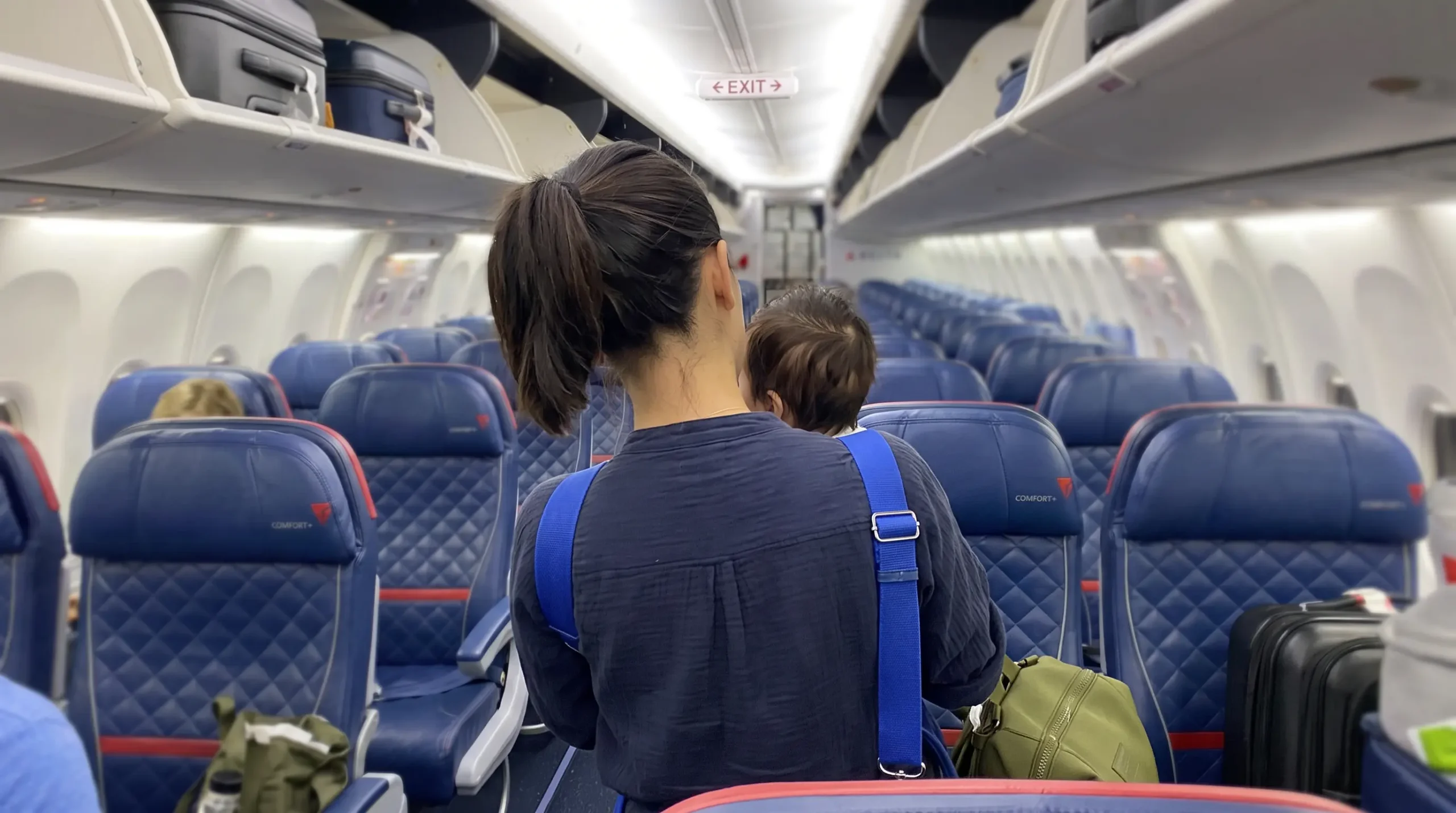
A quick note before we dive in: I’ve flown solo with my daughter across several airlines, Swiss, TAP Portugal, Norwegian, and Ryanair, but not Delta specifically, so I’m not going to pretend otherwise. What I can offer is a genuinely useful combination: real, lived infant-flying experience about what actually matters in practice, laid over Delta’s own official policy, verified directly from delta.com rather than paraphrased secondhand. That’s the guide below.
Table of Contents
- Delta’s Lap Infant and Under-2 Policy, Explained
- Lap Infant vs Buying Your Baby a Seat: The Real Trade-Off
- Delta vs Other Major US Airlines: Infant Policy Compared
- Step by Step: Booking a Lap Infant on Delta.com
- SkyCot and Bassinet Reality Check
- The Day-of-Travel Timeline
- What to Pack: A Realistic Checklist
- Handling Meltdowns, Ear Pain, and Judgmental Looks
- My Verdict
- FAQ
Delta’s Lap Infant and Under-2 Policy, Explained
Delta’s official policy, verified directly from delta.com, breaks down like this: a child under 2 can travel as an Infant-in-Arms, meaning on your lap, or in their own purchased seat with an FAA-approved car seat. Only one adult can hold one lap infant, no exceptions, due to FAA safety requirements.
| Within the US | International | |
|---|---|---|
| Infant-in-Arms (lap) | Free, must still be added to your ticket | About 10% of adult fare, plus taxes and fees |
| Own seat with car seat | Full adult fare ticket required | Full adult fare ticket required |
A few specific rules worth knowing before you book:
- Newborns under 7 days old may not travel unless a physician who has physically examined the baby provides a written approval letter
- You’ll need a purchased ticket for your infant if you’re crossing between countries, even as a lap infant, if your child turns 2 during the trip, or if you want them to earn SkyMiles
- Exit rows, aisle seats, bulkhead rows with a stroller-combo car seat, and Delta One flatbed seats on certain A330 aircraft aren’t permitted with a child safety seat
- Booster-type car seats can come on board but cannot be used during taxi, takeoff, or landing
Source: Delta Air Lines, Infant Air Travel (delta.com), verified directly.
Lap Infant vs Buying Your Baby a Seat: The Real Trade-Off
Free is obviously appealing, but “free” isn’t the only variable worth weighing. Delta itself recommends purchasing a seat and using an FAA-approved car seat for children under 2, and it’s worth actually thinking through why before you default to the lap option.
- The flight is short, under 2 to 3 hours
- Budget is the deciding factor, and the flight isn’t full
- Your baby sleeps well being held or babywearing-style
- This is domestic travel, where the lap option costs nothing at all
- It’s a long-haul or overnight international flight
- You want the real protection a car seat gives during unexpected turbulence
- Your arms and back need the actual break for a longer trip
- The flight is close to full and you’d rather not risk being separated from your assigned seat
The honest math: on a domestic flight, a lap infant costs $0 versus a full adult fare for a seat, often several hundred dollars. On an international flight, the gap narrows, a lap infant runs about 10% of the adult fare, while a seat costs the full fare, so you’re weighing a real but smaller price difference against genuinely more safety and comfort on a long flight.
Delta vs Other Major US Airlines: Infant Policy Compared
If you’re comparing carriers before booking, here’s how Delta stacks up against American, United, and Southwest on the details that actually matter with a baby.
| Airline | Domestic lap infant | International lap infant | Notable perk |
|---|---|---|---|
| Delta | Free | ~10% of adult fare | SkyCot bassinets on select widebody routes |
| American | Free | ~10% of adult fare | Free stroller and car seat gate-check |
| United | Free | ~10% of adult fare | Bassinets on select widebody international aircraft |
| Southwest | Free | Limited international network | Family boarding between groups A and B, open seating |
All four majors offer free lap infant travel domestically and free stroller and car seat gate-checking. Southwest’s biggest practical advantage is its dedicated family boarding window, which matters more than it sounds when you’re setting up a car seat under time pressure. Always confirm current policy directly with the airline before booking, as fare rules and bassinet availability can change.
Step by Step: Booking a Lap Infant on Delta.com
If adding the infant online doesn’t go through, or you’re booking international travel, contact Delta Reservations directly through the Help Center on delta.com. Add your baby to the reservation as early as possible, showing up at the gate with an unlisted infant can complicate check-in.
SkyCot and Bassinet Reality Check
Delta’s SkyCots are available free of charge, but only under specific conditions, and they’re genuinely limited, worth knowing exactly what you’re eligible for before you count on one.
The honest reality parents don’t always hear ahead of time:
- It’s never guaranteed. Only two per aircraft means requesting one is not the same as getting one, especially on popular routes
- Most babies outgrow them faster than the size limit suggests. A baby nearing the 25 lb or 26 inch limit often isn’t comfortable in one anyway, well before those exact numbers
- Your baby still needs to be held during takeoff, landing, and whenever the seat belt sign is on, so the bassinet only helps for cruise portions of longer flights
- It bolts to the bulkhead wall, right in front of your seat, which usually means a bulkhead seat assignment, request that too when you call
Worth requesting for a genuinely long overnight international flight with a smaller baby, less worth the effort for a shorter flight or an older, more mobile baby who won’t want to stay in it anyway.
The Day-of-Travel Timeline
Policy is one thing, timing is what actually determines how the day feels. Here’s how to sync naps and feeds around boarding, takeoff, and landing.
- 2 hours before boarding: A full feed and a diaper change, ideally before you’re navigating security with a hungry baby
- At the gate: Add the infant to your reservation if you haven’t already, confirm your SkyCot request if applicable, and use pre-boarding
- During boarding and taxi: Keep baby calm and upright, this isn’t the moment for a feed, save it for takeoff
- During takeoff: Nurse, bottle-feed, or offer a pacifier, the swallowing motion equalizes ear pressure as altitude changes
- Cruise: This is nap window. Babywearing or the SkyCot, if you have one, both work well here
- During descent and landing: Feed again, same reasoning as takeoff, ear pressure changes fastest during descent
What to Pack: A Realistic Checklist
Handling Meltdowns, Ear Pain, and Judgmental Looks Mid-Flight
This part rarely gets talked about honestly, but it’s often the part parents worry about most.
On the judgmental looks: most people on that plane were a crying baby once too, and the ones who weren’t aren’t worth the mental energy. Do what helps your baby, apologize once with a smile if you want to, and let it go. You’re not obligated to perform calm perfection for strangers who’ll forget this flight by baggage claim.
My Verdict
“Add the infant to your reservation early, request the SkyCot but don’t count on it, and feed on takeoff and landing. The rest genuinely sorts itself out.”
I haven’t flown Delta specifically with my daughter, but the fundamentals that made every one of my flights with her manageable, feeding on takeoff and landing, gate-checking the stroller without stress, packing for one more delay than you expect, apply just as much here. Delta’s own policy is more generous than it first looks, especially on gate-checked gear costing nothing at all. The SkyCot is the one thing worth tempering your expectations on, request it, but build your plan as if you won’t get it, and anything beyond that is a pleasant surprise.
Frequently Asked Questions
Does Delta charge for a lap infant on domestic flights?
No, a child under 2 flies free as a lap infant on domestic Delta flights, though they still need to be added to your ticket as Infant-in-Arms.
Do I need to pay for an infant on international Delta flights?
Yes, international lap infants cost about 10% of the adult fare plus applicable taxes and fees. A ticket is required for any international travel, even as a lap infant.
Can I bring a car seat on Delta for free?
Yes, Delta doesn’t charge any fee for traveling with a stroller or FAA-approved car seat, and neither counts toward your baggage allowance. You can check them at the counter or gate-check them right before boarding.
What age does a baby need their own seat on Delta?
A child must have their own purchased seat starting at age 2, even if they were a lap infant on the outbound leg and turn 2 before the return flight.
Does Delta provide bassinets or SkyCots, and how do I request one?
Yes, on select widebody international or long domestic routes, for babies under 25 lbs and 26 inches. Request one through Delta Reservations before arriving at the airport, but availability is limited to two per aircraft and confirmed only at the gate.
Can I gate-check my stroller for free on Delta?
Yes, gate-checking a stroller is free on Delta, and it doesn’t count toward your baggage allowance. You can also check it earlier at the ticket counter if you’d rather not carry it through the airport.
What documents do I need to fly with a lap infant on Delta?
A birth certificate for domestic travel, or a passport for international travel. Your child also needs to be added to your reservation as Infant-in-Arms before you arrive at the airport.
How early should I check in when flying with a baby on Delta?
Delta itself suggests allowing extra time between connections for rest and bathroom breaks with a baby. Arriving with plenty of buffer before boarding also gives you time to sort out gate-checking a stroller or confirming a requested SkyCot.
Is it better to buy a seat for my baby or fly as a lap infant?
For short domestic flights, lap infant is usually fine and free. For long-haul or overnight international flights, a purchased seat with a car seat gives real turbulence protection and more comfort, worth the added cost on longer trips.
What is the best seat to book when traveling with a lap infant on Delta?
A bulkhead seat is useful if you’re hoping for a SkyCot, since it bolts to the wall in front of bulkhead rows. Otherwise, avoid exit rows, which aren’t permitted with a lap infant or child safety seat at all.
Keep exploring